The Plain Game

What is the Plain Game?

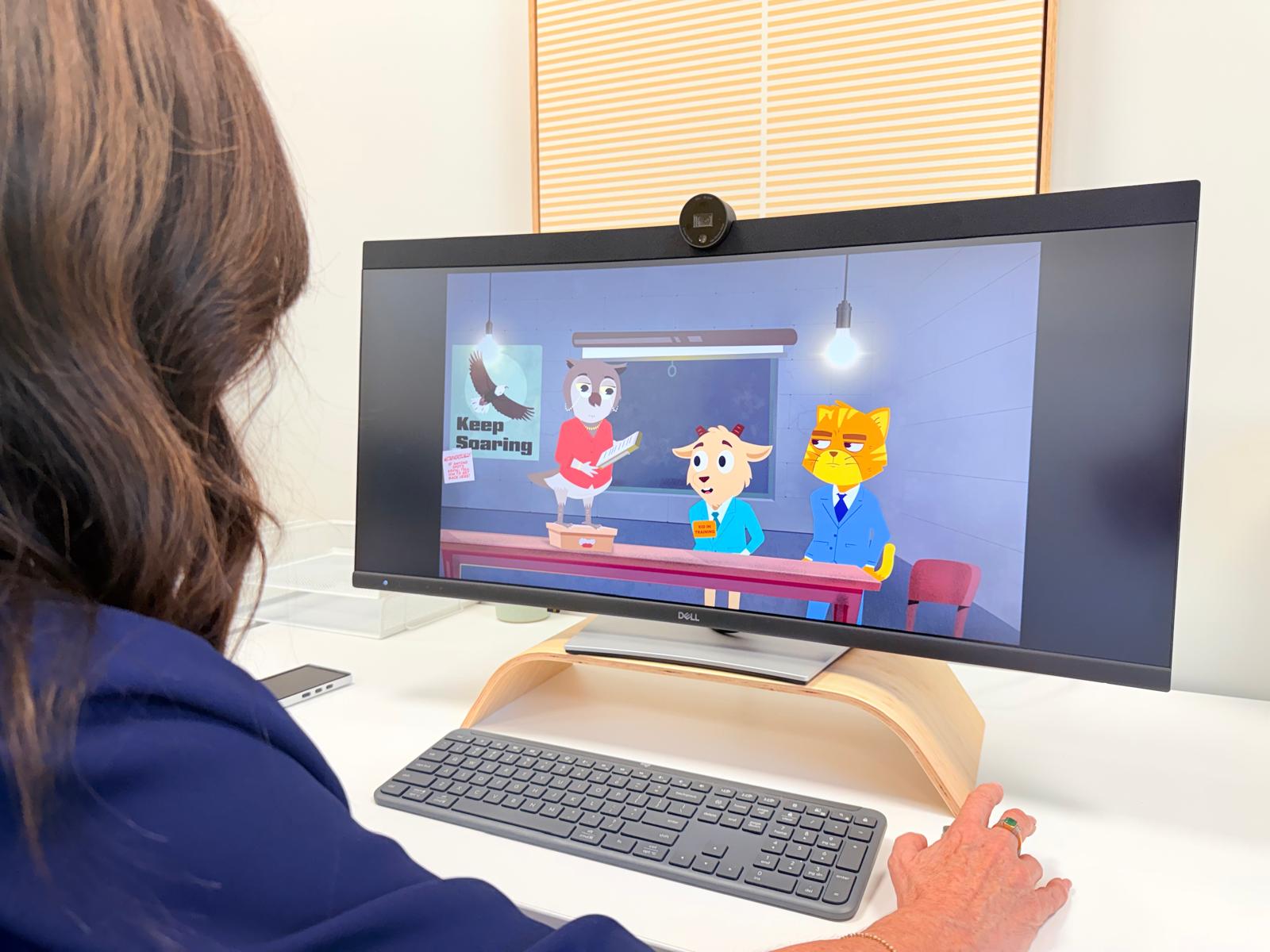
In The Plain Game, people learn to write in plain language while being guided through stories, quizzes, and challenges by a cast of colorful animal characters who work in an office together.

The game is an online plain language training game.
The fun of the game is the key to learning.

The Plain Game’s learning content is based on a plain language course that one of our co-founders, Christopher Balmford, and his friends and colleagues, have delivered to thousands of people around the world for over 30 years.

How you will learn

Our online games are made up of engaging videos, educational material, and fun quizzes that help you learn.
Module Three Icon from Ultimate Regular - Free set by streamlinehq.com

There are 4 modules of learning in The Plain Game.

Single Neutral Actions Check 2 Icon from Ultimate Regular - Free set by streamlinehq.com

The learning is self-paced and flexible.

App Window Clock Icon from Ultimate Regular - Free set by streamlinehq.com

Each module is made up of 3 to 6 topics, and each topic takes around 10 minutes to complete.

Android 1 Icon from Ultimate Regular - Free set by streamlinehq.com

Players can practise and apply the skills they have learned using our built-in AI practice, coaching and assessment tool.

Target Center Monitor Icon from Ultimate Regular - Free set by streamlinehq.com

Players can also choose to do a baseline assessment. This assessment will then prioritize learning based on the individual’s needs. If a player shows competency in a particular topic in the baseline assessment, they can skip that module or topic.  This provides tailored training to each player.

Learning outcomes

Here are the learning outcomes players will achieve by playing our Plain Game.   
In these outcomes, we refer to a player as “you.”
Module 1

Audience and Purpose

What it covers

  • Why it’s important to understand your audience and the purpose of your document before you start writing.
  • Ways to get information about your audience.
  • Meeting the needs of your audience.
Alignment to ISO Standard
  • ISO 5.1.2
  • ISO 5.1.3
  • ISO 5.1.4
  • ISO 5.1.6
  • ISO 5.2.3

Learning and assessment

You can pause and resume your training any time (self-paced).

Learning outcomes

After you successfully complete this module, you should be able to use these skills:
Identify the intended reader, their context, and their needs, so you can tailor written communication effectively.
State the purpose of a communication from the reader’s perspective.
Prioritize your reader's needs.
Apply plain language principles to ensure messaging is clear, relevant, and effective.
Module 2

The Writing Process

What it covers

  • The different stages and associated techniques used when writing in plain language.
Alignment to ISO Standard
  • ISO 5.1.2
  • ISO 5.1.3
  • ISO 5.1.4
  • ISO 5.1.6
  • ISO 5.2.3

Learning and assessment

You can pause and resume your training any time (self-paced).

Learning outcomes

After you successfully complete this module, you should be able to use these skills:
Gather and analyze information through brainstorming and targeted research, which will help you meet reader needs.
Structure information logically to ensure clear flow and coherence from the reader’s perspective.
Apply plain language principles to write clear, concise, reader-focused text.
Review content for accuracy, findability, readability, and understandability in line with plain language principles.
Module 3

Write for your Readers

What it covers

  • How to use language effectively to meet your readers’ needs.
  • The focus is on words and sentences.
Alignment to ISO Standard
  • ISO 5.1.2
  • ISO 5.1.3
  • ISO 5.1.4
  • ISO 5.1.6
  • ISO 5.2.3

Learning and assessment

You can pause and resume your training any time (self-paced).

Learning outcomes

After you successfully complete this module, you should be able to use these skills:
Assess your readers’ needs and context to tailor messaging and tone, and language.
Choose familiar, clear words and avoid unnecessary jargon or inflated language.
Apply plain language principles to write concise sentences that convey meaning efficiently.
Module 4

Writing that Connects with your Readers

What it covers

  • Using verbs and active and passive voice.
  • Dealing with sentence structure and flow.
  • Planning and structuring paragraphs.
Alignment to ISO Standard
  • ISO 5.1.2
  • ISO 5.1.3
  • ISO 5.1.4
  • ISO 5.1.6
  • ISO 5.2.3

Learning and assessment

You can pause and resume your training any time (self-paced).

Learning outcomes

After you successfully complete this module, you should be able to use these skills:
Use strong, action-oriented verbs to direct readers toward the intended action.
Write about people and real-world situations to engage and connect with readers.
Apply plain language principles to construct clear, well-structured sentences that are easy to read and follow.
Plan and structure paragraphs logically to ensure coherence and unity of ideas.
Use signposts and transitions to link ideas and guide readers through the text.
Position new information strategically within sentences to maximize reader attention.
Apply active and passive voice appropriately to suit purpose, clarity, and emphasis.

Micro-credentials

You are eligible for a micro-credential when you have completed The Plain Game.

While practising and applying what you have learned, our AI tool will track your progress.  

You will earn a micro-credential once you have shown your ability to successfully apply all the principles of plain language to your writing.